Tea & Coffee Plantation Tours – Scenic landscapes and local tasting experiences
Tea & Coffee Plantation Tours – Scenic landscapes and local tasting experiences: Besides its scenic beauty, Burundi’s green hillsides are the source of two of the world’s most renowned drinks, to mention: tea and coffee.
Booking a coffee safari to Burundi gives tourists a paramount journey from the green plantations to the final aroma in the cup, offering an insight into the country’s agricultural foundation and the lives of the local farmers.
How have these two crops been of great importance to Burundi?
Tea and coffee are more than simply crops; they are very important to the country’s economy, generating substantial export earnings for the country in the form of foreign exchange, thus supporting the livelihoods of a sizable section of the population, especially smallholder farmers.
Due to its distinct flavor characteristics, coffee in particular from Burundi has become popular around the world.
Coffee Plantation: The Bean from the “Heart of Africa”
Arabica coffee, which makes up the majority of Burundi, is highly sought after for its substantial body, sweet flavors, and sparkling acidity. Its unique flavor is influenced by the fertile volcanic soils and high elevation.
The Tour Experience:
Farm Visits: Take a walk through the scenic coffee plantations, many of which are terraced around the hills. Local farmers would be happy to walk you through every step of their farming practices, from sowing seedlings to carefully selecting ripe red cherries by hand.
A vital stage in the processing of Burundian coffee is the use of washing stations, often known as wet mills. Coffee cherries are pulped, fermented, cleaned, and then dried on raised beds often referred to as “African beds” at washing stations. The highlights of this safari are watching all the processes through which coffee is produced; this contributes to the flavors of coffee after production.
Cupping Sessions: A lot of trips to Burundi for coffee and tea plantations end with a cupping session where you will learn how to taste and assess various coffees expertly and understand the subtleties and complexity of Burundian beans.
Coffee and tea roasting: To give you a full “bean-to-cup” knowledge, some trips may include a visit to a small local roastery.
Key Coffee-Growing Areas and Places to Visit:
Migoti Coffee Company: Popular for its excellent coffee, Migoti Coffee Company is situated on the high hills west of Bujumbura. They frequently give guests in-depth tours of their washing station and neighboring farms.
Other coffee-growing regions, especially the provinces of Kayanza, Ngozi, and Muramvya, have a number of different washing stations. Where you can find other accessible coffee stations with the help of your tour operator.
Tea: The Emerald Carpets of the Highlands
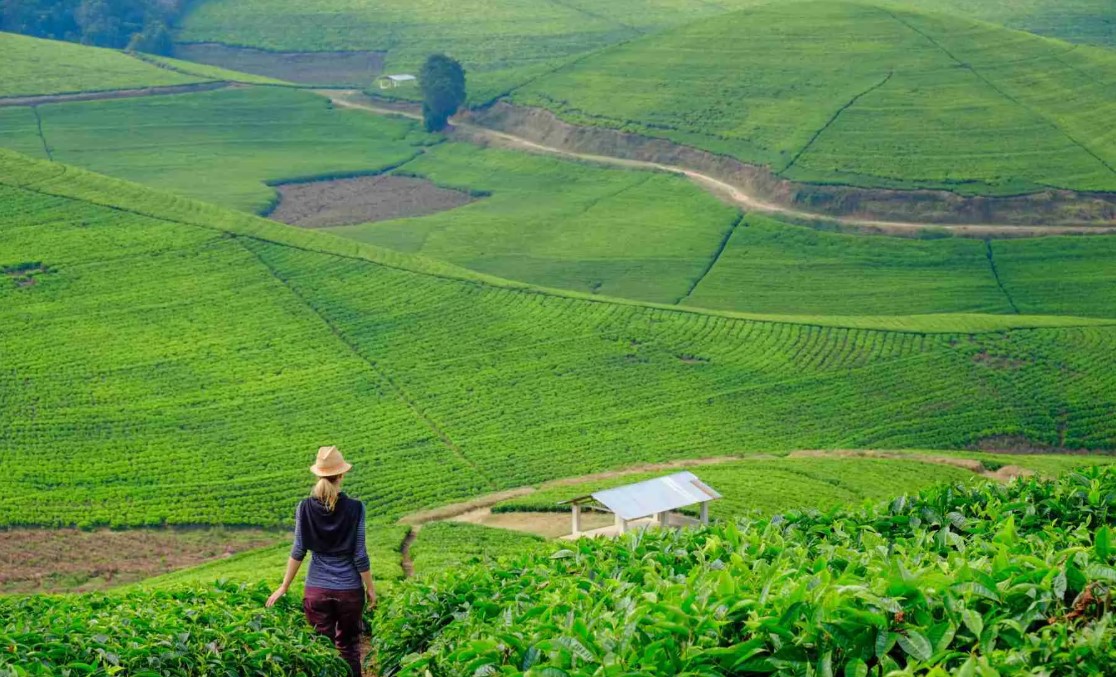
Tea plantations in Burundi, which cover the rolling hills in stunning green carpets, are a remarkable aspect of the highland scenery.
The Experience of the Tour:
Walks within the Tea Plantations: Walk through the tidy rows of tea plantations, which can provide stunning panoramic views. Find out about the many kinds of tea (such as black tea) and the particular growing circumstances.
Tea Picking: Clients will have a great opportunity to watch the experienced female tea pickers pick the “two leaves and a bud,” the most fragile elements of the tea plant that are essential to the quality of tea to be produced. There may even be an opportunity for you to attempt tea picking
Factory Tours: Take a tour of the tea processing plant to see the various processes involved in making tea, including rolling, oxidation (fermentation), drying, grading, and withering. The factory frequently has enticing scents.
Tea Tasting: Enjoy a refreshing cup of fresh-made Burundian tea to cap off your trip.
Key Tea Plantations to Explore:
Plantation Estate of Teza: One of the oldest and most well-known tea farms in Burundi. Teza Tea Estate is situated in the scenic Muramvya region. It provides opportunities to learn about the production of tea as well as fascinating sights.
Other Tea Plantations: There are several other large tea plantations situated in the cooler and higher altitudes, such as those close to Kayanza.
Planning your trip
Best Time to Visit Burundi for:
Coffee Plantations: March and June to July is generally when the primary coffee harvest season occurs. You may witness the full processing cycle in action if you visit Burundi around this time.
Tea Plantations: Although tea is harvested all year round, the dry season (June to October, December to February) may offer pleasant conditions.
Logistics: A 4×4 vehicle is necessary for tea and coffee farms, which are often located in rural areas and occasionally steep places.
Use local guides and operators: We recommend using a local tour operator to reserve and organize your safari in addition to giving you professional guides who will make it easier to see industries and plantations, thus meeting your safari interests.
Support Local Communities: You can directly support the agriculture industry of Burundi and the local communities that rely on the country’s agricultural sector through booking safaris to these plantations and processing plants.
A tea or coffee safari to Burundi is generally a cultural and economic experience that gives you an insight into the country and the hardworking people and industrial sectors.